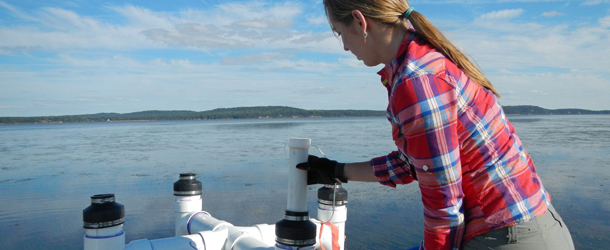
Nina Santos is a Ph.D. student at the Chesapeake Biological Laboratory at the University of Maryland Center for Environmental Science. For her dissertation, she is focused on small shrimp-like crustaceans called mysids – an understudied yet important part of many estuarine and coastal food webs.
Fellowship Experiences
A blog by and about students supported by Maryland Sea Grant
Photo, Debbie Hinkle
Embracing the Edge
Jacob Hagedorn •
A recent NPR Hidden Brain podcast discussed the idea of the edge effect, which is the concept of encouraging collaboration between people with diverse interests and backgrounds.
Read more...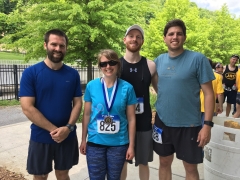
Running and Work-Life Balance
Joel Bostic •
It’s 5:20 a.m. and the alarm is blaring. I get out of bed, drink a glass of water, and lace up my shoes. I open the door and am greeted by the cold, dark morning. I begin slowly jogging, gradually accelerating to a comfortable pace, and continue this simple exercise of placing one foot in front of the other for the next 30 to 60 minutes.
Read more...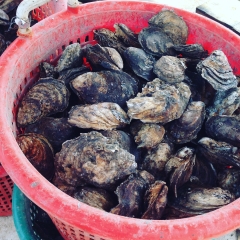
Livelihood Diversification and Maryland Oysters: What it means, and why we care.
Adriane Michaelis •
“Livelihood diversification” describes the process by which an individual or household takes on multiple income-generating activities.
Read more...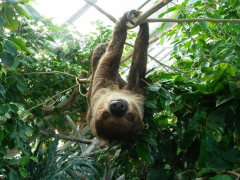
After Hours at the National Aquarium
Carrie Perkins •
Since moving to Baltimore in 2015, I wanted to be a volunteer at the National Aquarium. At that time, I was a lab technician at Loyola University Maryland who regularly took care of reptiles, rodents, and greenhouse plants, so I thought I would be a shoe-in. Eagerly, I filled out the online volunteer application and waited patiently for an invitation. Weeks, months, and years went by. Read more...
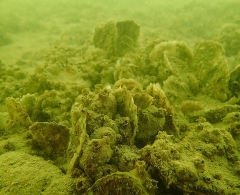
Can computer models help restore Maryland’s oyster population? It looks like yes.
Katie Hornick •
Oysters are crucial to a healthy Chesapeake Bay. They filter water, attract biodiversity and provide essential habitat for other important Bay organisms. Today, less than one percent of the oyster biomass that existed before European settlers arrived remains in the Chesapeake. Read more...
